
|
|
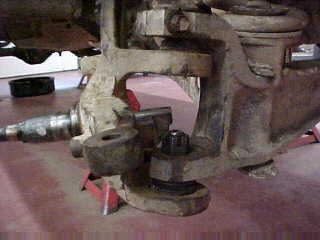
This job here was a bottom ball
joint on a 89 FORD 1\2 Ton
I found that this ball joint job
took a lot longer than a ball joint
job on a 89 Chev 1\2 Ton because
of the fact that you had to
remove the entire spindle and tie
rod assembly's instead of pulling
it out of the way.
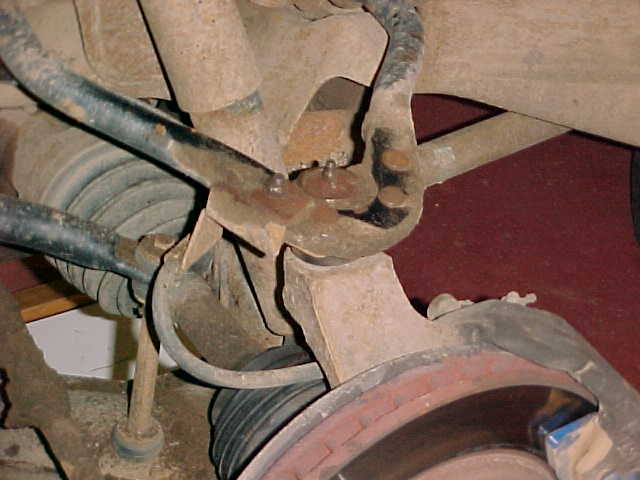
This picture here was taken before
I replaced the top ball joint
on an 89 Chev 1\2 Ton
I found this job was pretty straight
forward. As you can see this
ball joint has never been replaced
because it is riveted in.
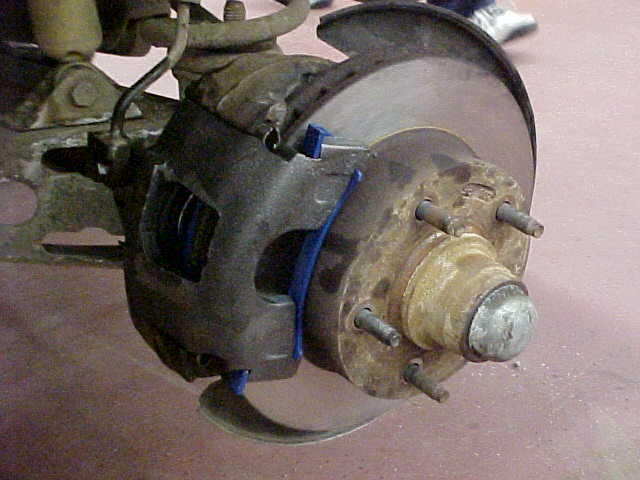
This is a picture of a 93 FORD
1\2 Ton front brake assembly.
In this picture you can see that
I have replaced the calipers
for the reason that the old ones
where seized and have installed
new shoes and have machined the
old rotors.
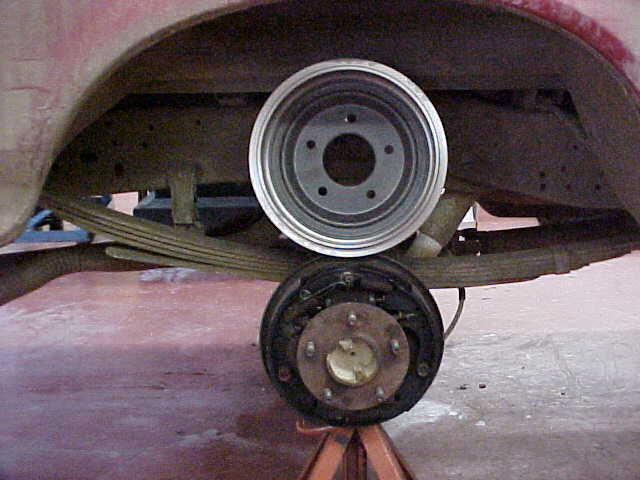
This is the same 93 Ford 1\2 Ton,
This is the rear brake assembly
In this photo you can see that I
have replaced the rear drums for the
reason that the old ones where
oversized, installed new shoes and
have also rebuilt the old wheel
cylinders.
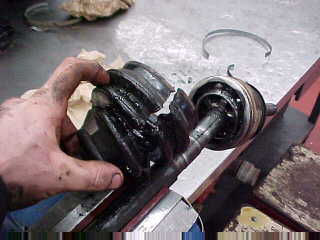
This is a CV axle out of a Nissan
Pulsar, it had ripped CV boots
This was the first set of CV boots
that I've done. I found that it
was pretty simple once you got
the CV axle out from the car. I
also found that it is cheaper if
you find stuff like this before sand
and road debris enter the joint
and destroy it.
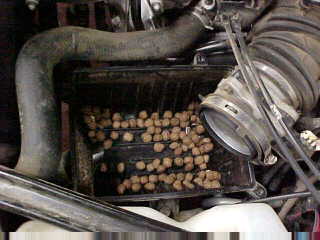
This is a photo of a 91 Chevy Lumina,
with a lack of power complaint.
This photo was taken after I vacuumed
out about 3\4 of the dog food
out of the air box. It seems
the mice stockpiled for the winter.
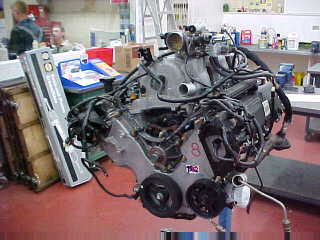
This was an in class assignment
where we had to tear down
an engine to it's block plastigauge
1 rod and 1 main, remove
1 piston and 1 set of valves and
assemble the engine again.
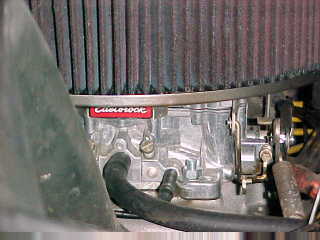
This is 1 of our instructors vehicles,
on start up it smoked black.
This is a 650 Edelbrock carb,
I removed the top of it and adjusted
the float level. It solved
the black smoke on startup.
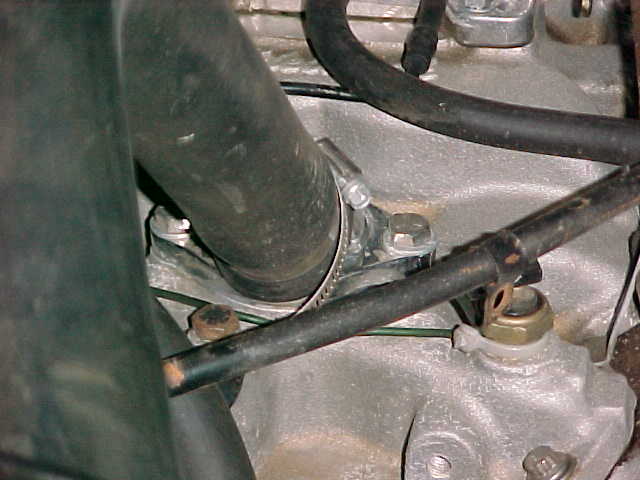
This is the same instructors vehicle.
It had a nasty coolant leak.
The original O-ring that came with
the thermostat housing was
deteriorated, No O-rings
where available so a little silicone solved
the problem.
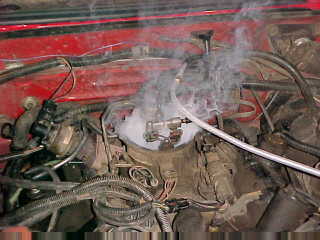
This here is my car. It was
running rough and backfiring.
The smoke test machine was very
helpful in finding my EGR
Valve leak. The backfire
was from the air pump pumping
oxygen into the exhaust system
with no catalytic converter.
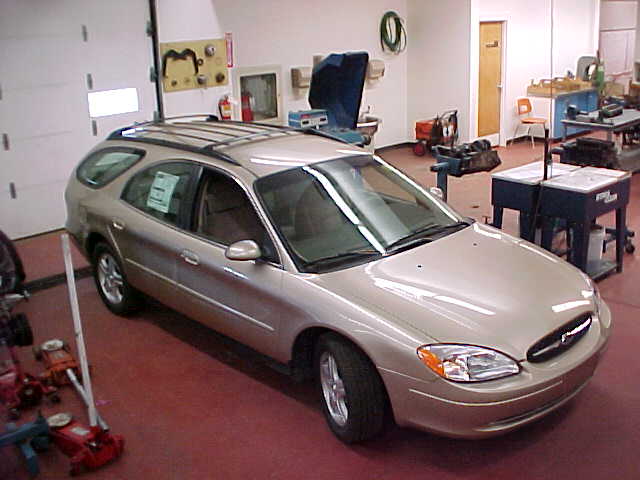
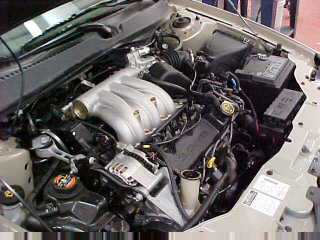
These pictures here are of a 2000
FORD Taurus which 1 of our instructors acquired for me and a classmate
to use while practicing for the CAA Skills Competition held in Edmonton
where we won
2nd Overall. Our school has
now qualified to go to the nationals that are held in West Edmonton Mall.
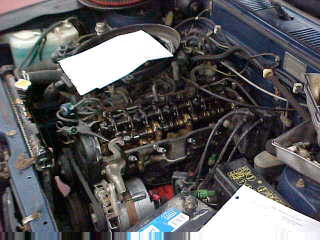
This is an 84 toyota tercel, the
engine was making a lot of
ticking noise,so we adjusted the
valve lash.